Two first registrations
Asociația Comunitatea Portului in Galați is the first registered renewable energy community, while Micăsasa Coop Energy Cooperative in Sibiu County is the first registered citizen energy community.
Their registration marks the effective launch of the register created under ANRE Order 50/2026. Registration confirms the legal and administrative framework; on its own, it does not prove that every energy-sharing flow is already operating.
What an energy community is
An energy community is a legal entity through which citizens, SMEs, municipalities, associations and other organisations can jointly produce, consume, store, share or sell energy. More than 8,000 energy communities already exist across the European Union.
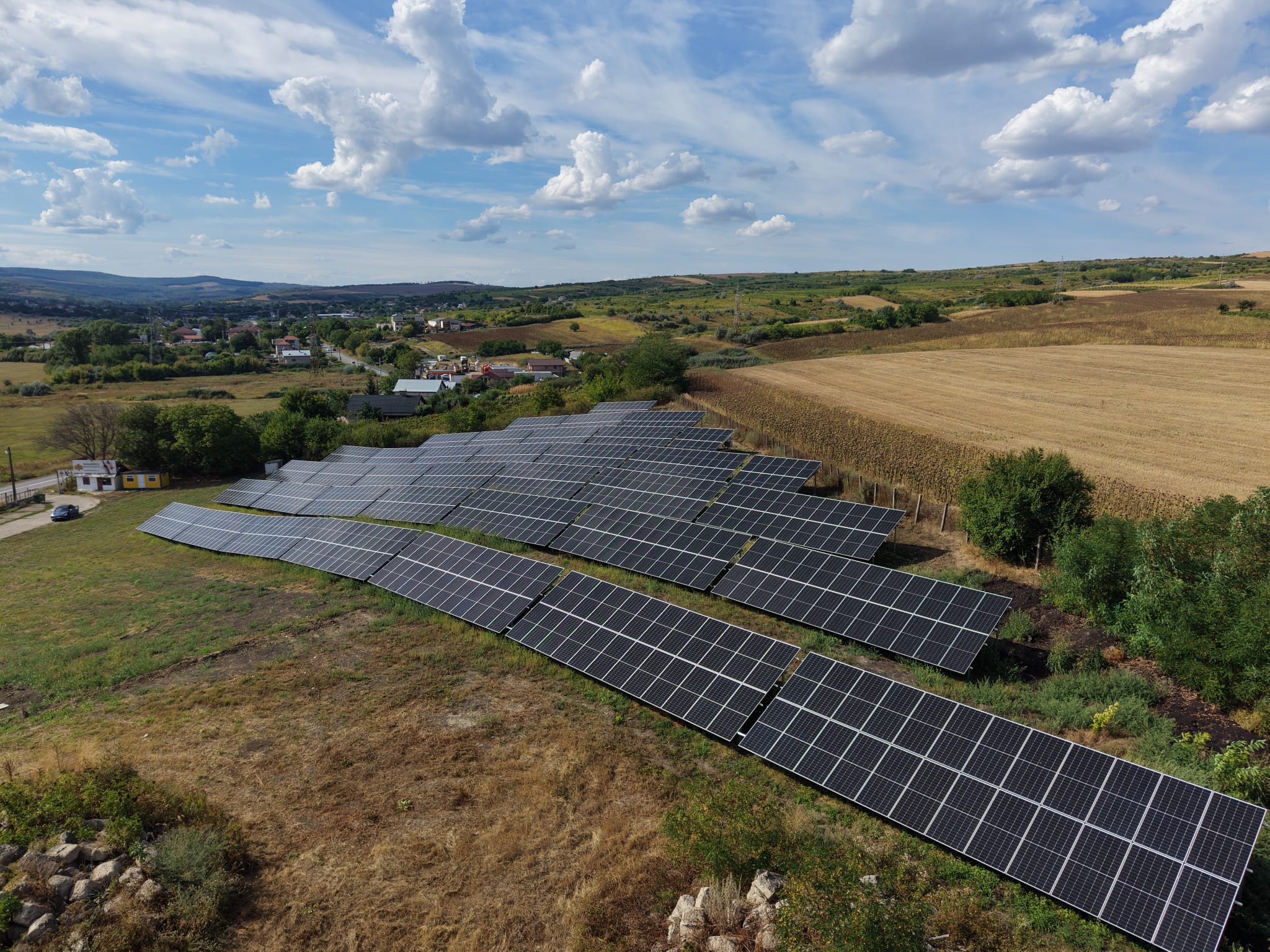
A local project may combine photovoltaics on public buildings, industrial roofs or land with local consumers, BESS storage, EV charging and heat pumps.
How energy can be shared
The ANRE framework provides for a shared-energy contract, a main-supplier contract covering energy deficits and a multiparty agreement between the community, supplier and distribution operator.
Energy may be allocated in proportion to each member’s actual consumption or through fixed percentages defined in the community rules. The distribution operator determines and validates the quantities used for billing.
Savings must be demonstrated
A well-designed community can increase local self-consumption, reduce exposure to market-price volatility and use available roofs and land more effectively.
Results depend on the match between production and demand, grid capacity, metering, capital cost, financing, operating expenses and benefit-allocation rules. Equipment should therefore be selected only after technical and financial feasibility analysis.
From an idea to a viable project
ECONERGY can support energy audits, load-profile analysis, photovoltaic and BESS sizing, technical-financial modelling and coordination of technical, legal and operational stages with authorised specialists.
Audit consumption and existing installations
We review bills, load profiles, equipment and installation condition to establish real demand, losses and the areas where investment can deliver the greatest benefit.
Identify members, sites and energy resources
We map participants, available generation and storage locations, consumption profiles and local resources that can be integrated into the community.
Define the legal entity and governance rules
Together with legal specialists, we define the community structure, members’ rights and obligations, decision-making procedures and entry or exit rules.
Size photovoltaic generation and BESS storage
We calculate photovoltaic power and storage capacity using simultaneous demand, available surfaces, grid constraints and the community’s economic objectives.
Assess grid connection, metering and data exchange
We examine the connection solution, required meters, data availability and information flows between members, the supplier and the distribution operator.
Build the financial model, allocation method and risk scenarios
We model investment, savings, revenue and operating costs, then compare allocation methods and scenarios for prices, demand and generation.
Complete registration, contracting and operational setup
We structure the administrative and contractual pathway and define responsibilities for monitoring, maintenance, billing, reporting and continuous optimisation.